
When you think about it, horse racing feels a lot like trading forex, right? If you have ever placed a bet on horse racing, you already know how unpredictable the sport is and how valuable the historical data can be.
After all… both worlds thrive on prediction, psychology, and, of course, the balance between risk and reward.
Yes, one involves horses and the other is focused on currencies, but the mindset required to succeed in either isn’t all that different.
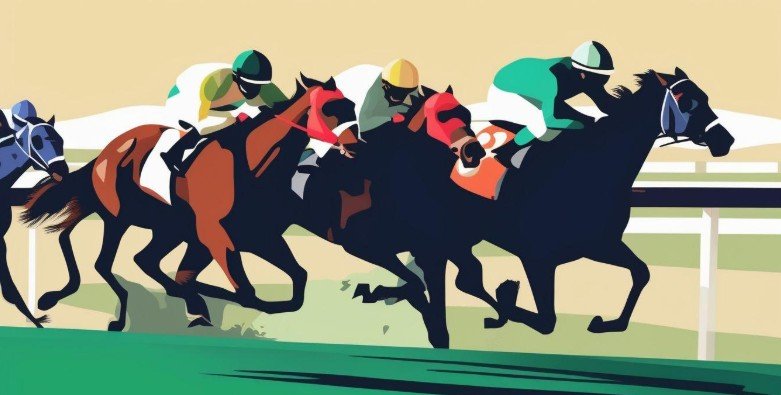
Since forex traders are always looking for a way to sharpen their skills and improve their decision-making, maybe horse racing is the answer. The sport has been around longer than any other, so it must have something to offer to forex traders, right?
This inspired us to dig deeper and try to find a correlation between forex trading and horse racing odds (betting). So, let’s draw some parallels from both worlds and see how horse racing betting can help you become a better forex trader.
The Odds Don’t Lie (But They Don’t Always Tell the Truth Either)
Horse racing is a unique sport in many aspects, and when we look at the pari mutuel betting system, we can see that it is based on the same principles as the forex market. For those that don’t know, a pari mutuel system is when the odds change based on betting action. If most people believe a particular horse will win the race, the odds of that horse will drop.
In other words, horse racing odds are a reflection of collective belief, or what thousands of bettors think will happen. The odds shorten when a horse is heavily backed, exactly the same as a currency pair strengthens when traders rush to buy.
Let’s look at forex trading:
- The market sentiment is the invisible force driving price movements.
- It’s why GBP/USD can spike on a single news headline.
- Both words are based on belief and prediction for the future, and that can reflect the odds and the currency movements in the future.
- So, you are looking at the probability that is dressed up as price or odds.
But here is what most beginners don’t understand.
The odds in horse racing never tell the full story. Yes, a 5/1 horse might look tempting, but if the track conditions change or the jockey’s having an off day, the value can evaporate in seconds.
On top of that, sometimes the collective belief can be wrong. When a horse’s odds shrink, it’s like a domino effect. Then, beginners who don’t know much about horse racing betting place a bet on the ‘favorite’ just because they think that this horse has the biggest potential to win.
The same goes for trading. An “attractive setup” can turn ugly fast when market sentiment flips.
That’s why smart bettors and traders share one crucial trait: They don’t just look at the odds. They are trained to read the story behind them.
Risk Management
We also have to talk about risk management, since it is a similar process in both worlds. Whether you are a horse racing bettor or a forex trader, you won’t win every single time, that’s for sure. The process becomes a survival game, where your goal is to survive long enough to keep playing.
That’s why in horse racing, disciplined bettors set a bankroll and stick to it. They don’t chase losses after a bad race or throw their whole balance on a “sure win.” So, you might browse the Breeders’ Cup 2025 entries and think Tommy Jo is the favorite, but things can shift quickly.
Forex traders face the same temptation. You take a loss, and suddenly you’re convinced you can make it back by doubling your next position. This isn’t a strategy, it’s revenge trading, and it doesn’t work in the real world (at least not in the long run).
Professionals understand that capital preservation is the real edge. So betting small, setting stop losses, and knowing when to call it a day are the things that keep you profitable over time.
Volatility
Let’s talk about the elephant in the room. What makes horse racing and forex trading so popular? Well, probably the rush and unpredictability of the market.
In racing, odds can swing wildly in minutes, and suddenly a favorite becomes an underdog. In trading, volatility hits with economic announcements, central bank comments, or just good old-fashioned market panic.
In both words, you need to have nerves of steel. Most amateurs get caught up in the drama, but professionals keep their heads cool.

Psychology
If you stripped away the numbers, both betting and trading are essentially games of psychology. You versus your emotions.
Think about it: when your horse wins, you feel like a genius. When it loses, you feel like the universe owes you one. Traders go through the same cycle: euphoria, frustration, overconfidence, doubt. The biggest danger isn’t the odds or the chart; it’s how you react to them.
That’s why both serious bettors and traders develop routines to keep emotions in check. Some meditate. Some journal. Some step away from the screen (or the track) after a loss. Because they know that emotional control beats raw instinct every single time.
Data and Gut Feel
There’s a romantic idea in both worlds that one lucky hunch or gut feeling can make you rich. But anyone who’s actually done this for a while knows it’s a blend of data and intuition.
In horse racing, bettors study:
- Form guides
- Track records
- Jockey stats
- Weather
Yet still trust a hunch when something doesn’t “feel” right.
Traders analyze charts, indicators, and macroeconomic data, but sometimes, they pull out of a trade because their experience whispers, “This looks off.”
The sweet spot lies in balance. Too much data, and you freeze. Too much gut, and you gamble. The best of both worlds? Use logic to filter the noise, then let intuition fine-tune your decision.
So, it seems like horse racing betting and forex trading are very much alike. People in both worlds are trying to find the same thing: an edge in an unpredictable world. Can it be calculated? Yes, of course. Can you win all the time?
Nope.
But stick to the right balance and you’ll be golden.